How might AI transform your scattered health journey – from forgotten medical records to unsynced fitness data – into one crystal-clear health story?
How might AI transform your scattered health journey – from forgotten medical records to unsynced fitness data – into one crystal-clear health story?
My role
My role
UX Designer -
UX Designer -
User research, Strategy, UI/ UX Design
User research, Strategy, UI/ UX Design
My team
Project manager, UX Lead, UX Designer, UI Designer
Project manager, UX Lead, UX Designer, UI Designer
Duration
3 months
3 months
Introduction
User-Centered Website for AI-Driven Health Solutions
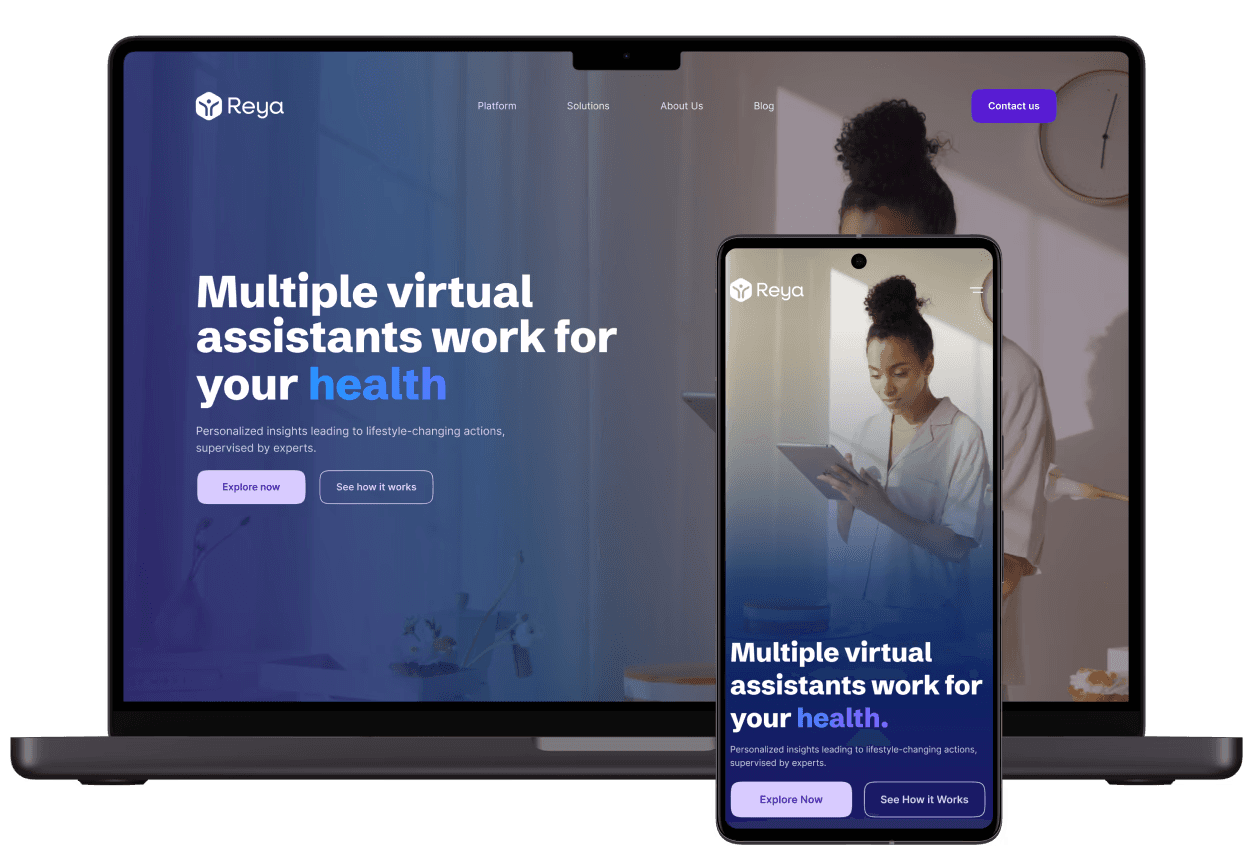
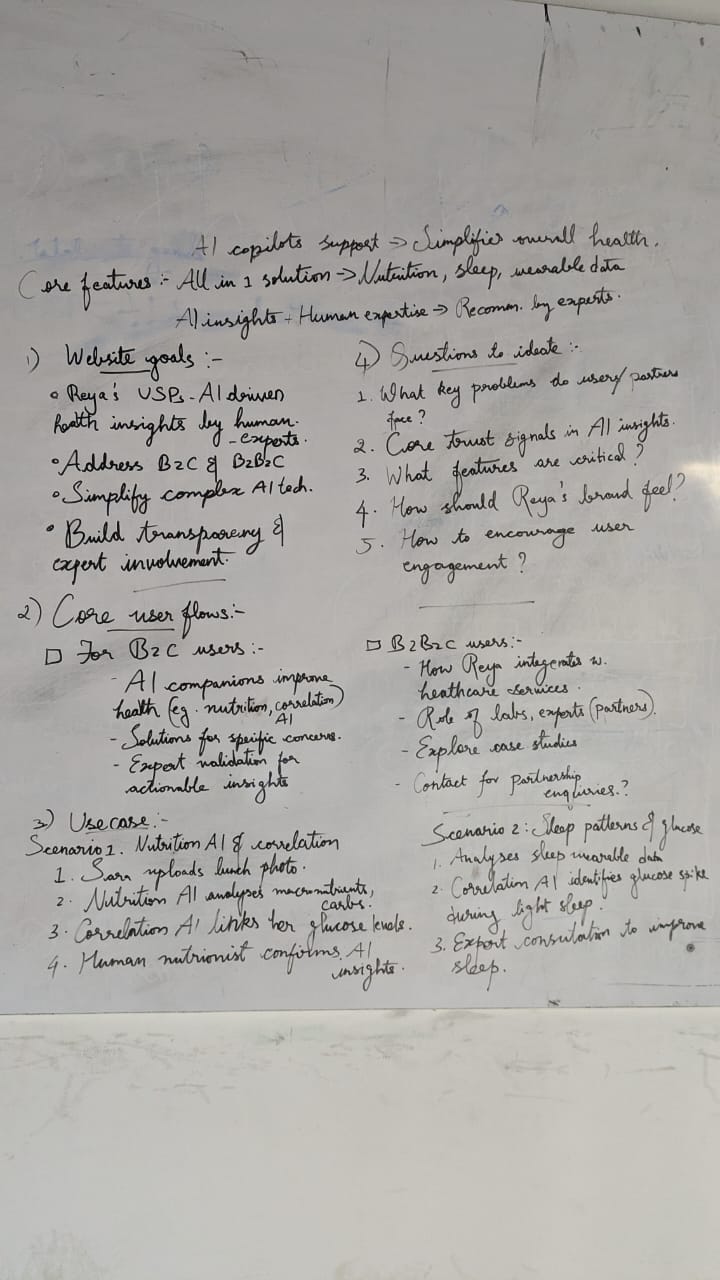
Reya AI is a healthcare technology company focused on providing AI-powered health companions that help users optimize their wellness, lifestyle, and longevity goals. These AI companions analyze real-time health data and provide personalized insights, while human experts validate the AI-driven recommendations. Reya’s challenge was to design a website that appeals to both B2C consumers and B2B2C healthcare partners, effectively communicating the benefits of their AI technology and the crucial human-in-the-loop supervision.
Reya AI is a healthcare technology company focused on providing AI-powered health companions that help users optimize their wellness, lifestyle, and longevity goals. These AI companions analyze real-time health data and provide personalized insights, while human experts validate the AI-driven recommendations. Reya’s challenge was to design a website that appeals to both B2C consumers and B2B2C healthcare partners, effectively communicating the benefits of their AI technology and the crucial human-in-the-loop supervision.
PROCESS
Just click on the button to jump directly to that part of the process

Problem definition
Reya AI needed a compelling digital platform to:
As individuals become increasingly health-conscious, managing various aspects of wellness—like nutrition, sleep, and activity—remains fragmented and overwhelming. Despite access to wearables and health apps, users struggle to draw meaningful insights from the data, often leading to inaction. The lack of a unified solution that connects these dimensions and provides expert-backed, actionable guidance leaves people guessing about how to achieve their health and longevity goals.
As individuals become increasingly health-conscious, managing various aspects of wellness—like nutrition, sleep, and activity—remains fragmented and overwhelming. Despite access to wearables and health apps, users struggle to draw meaningful insights from the data, often leading to inaction. The lack of a unified solution that connects these dimensions and provides expert-backed, actionable guidance leaves people guessing about how to achieve their health and longevity goals.
Waiting to understand your health patterns shouldn’t feel like a never-ending puzzle in an era where technology can provide instant, actionable insights...
Waiting to understand your health patterns shouldn’t feel like a never-ending puzzle in an era where technology can provide instant, actionable insights...
Why this is a problem?
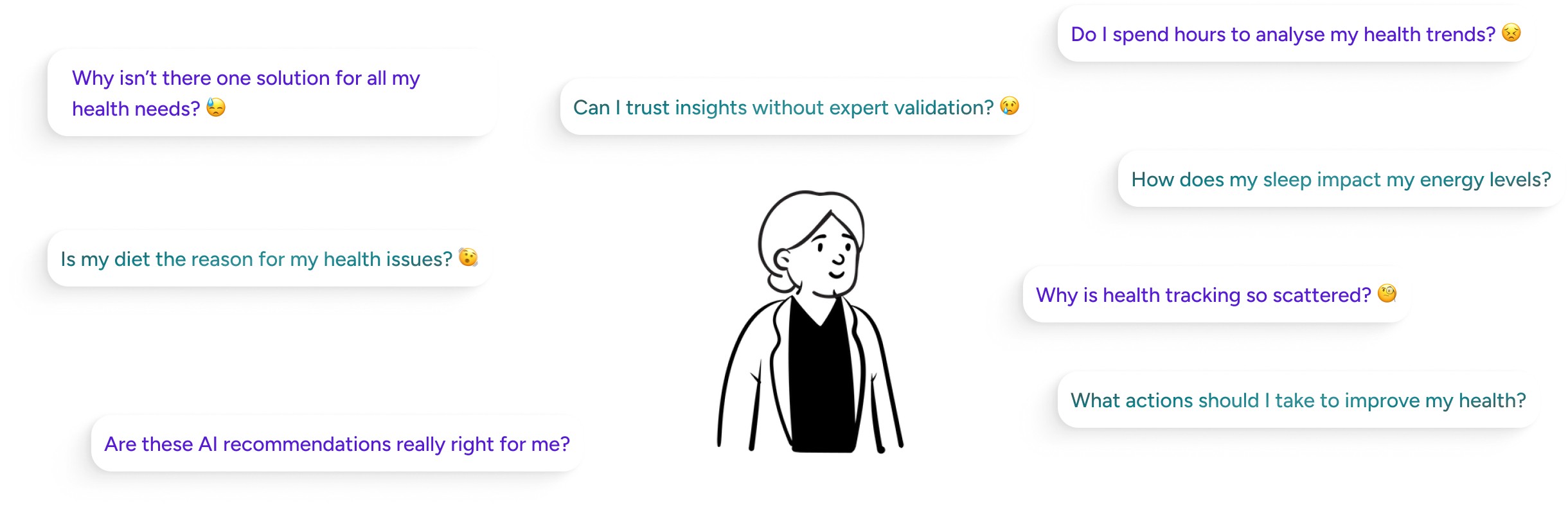
We analyzed user feedback, conducted interviews, and examined behavioral data to identify the key challenges faced by individuals managing their health:
We analyzed user feedback, conducted interviews, and examined behavioral data to identify the key challenges faced by individuals managing their health:
When do users feel the most frustrated with their health journey?
What causes them to abandon health tracking or stop using wellness apps?
Do they struggle to connect data from multiple sources like wearables, food logs, and sleep apps?
How often do they feel unsure about the accuracy or relevance of AI-only insights?
Do they trust automated health recommendations without expert input?
How do they feel about the time and effort required to interpret long-term trends?
When do users feel the most frustrated with their health journey?
What causes them to abandon health tracking or stop using wellness apps?
Do they struggle to connect data from multiple sources like wearables, food logs, and sleep apps?
How often do they feel unsure about the accuracy or relevance of AI-only insights?
Do they trust automated health recommendations without expert input?
How do they feel about the time and effort required to interpret long-term trends?
As a result of this, we were able to have an idea about the thoughts that pop up in a user’s mind due to multiple variable factors. It's definitely not a relaxed state to be in!
As a result of this, we were able to have an idea about the thoughts that pop up in a user’s mind due to multiple variable factors. It's definitely not a relaxed state to be in!
Target audience
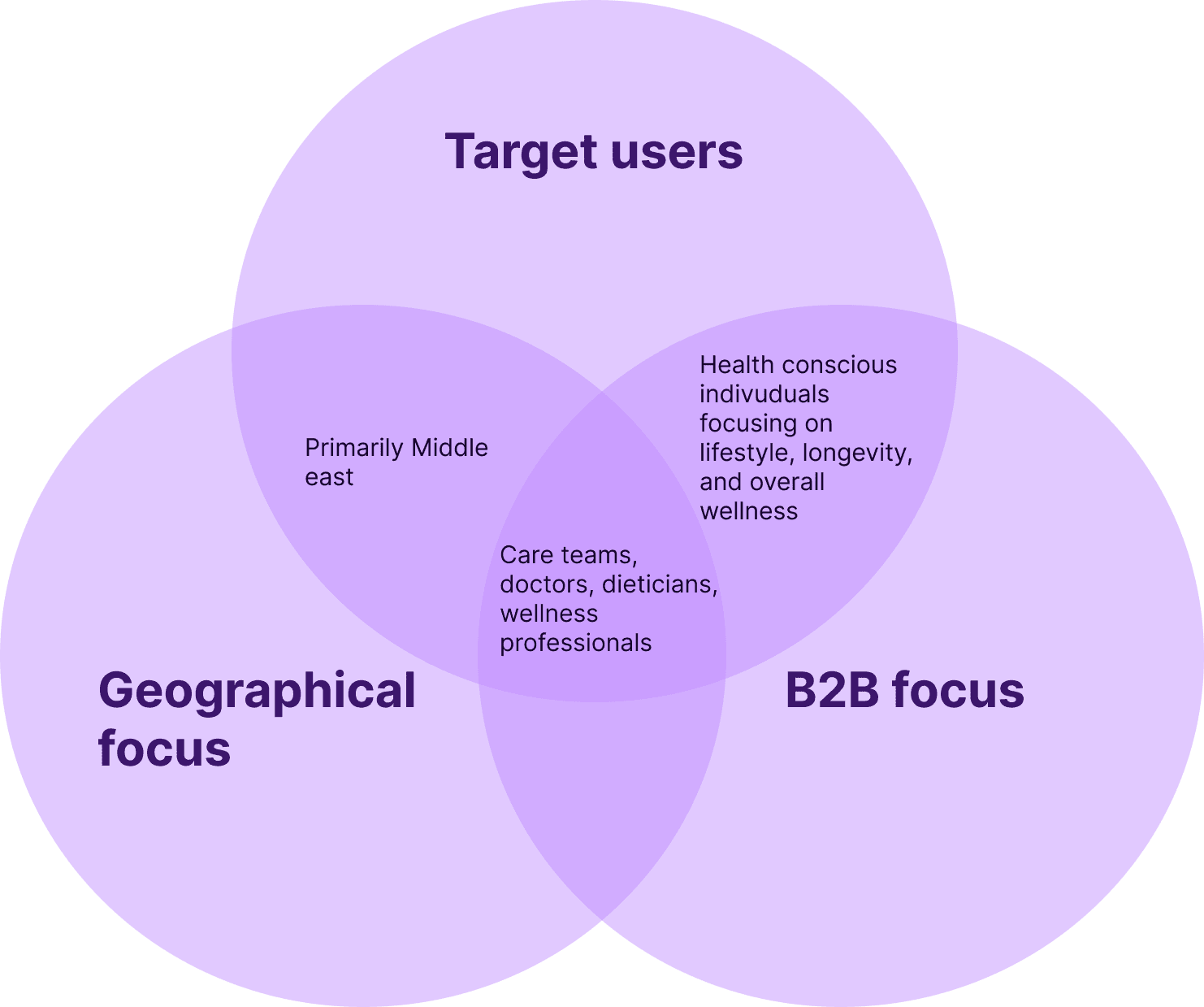
Our research identified three interconnected user segments, visualized in our market analysis Venn diagram:
The center of our Venn diagram—representing our primary focus—targets healthcare professionals in the Middle East serving health-conscious individuals, creating a holistic ecosystem that benefits all stakeholders.
Our research identified three interconnected user segments, visualized in our market analysis Venn diagram:
The center of our Venn diagram—representing our primary focus—targets healthcare professionals in the Middle East serving health-conscious individuals, creating a holistic ecosystem that benefits all stakeholders.
First steps first
UNDERSTANDING REYA’S UNIQUE MODEL
Your comprehensive companion...
is where users interact with...
Reya AI healthcare
Nutrition assistant
Wearables assistant
Correlation assistant
Health coach
AI health assistants
Generative AI
Enhanced care team
Real-time alerts
AI powered insights
Nutrition
Exercise
Sleep
Toxins
Stress
Social
Holistic view of health
...which are the driving force behind
...that results in
Why this is a problem?
Seek
ON
As a result of this, we were able to have an idea about the thoughts that pop up in a user’s mind due to multiple variable factors. It's definitely not a relaxed state to be in!
As a result of this, we were able to have an idea about the thoughts that pop up in a user’s mind due to multiple variable factors. It's definitely not a relaxed state to be in!
Ideation
Initial Ideation & Insights
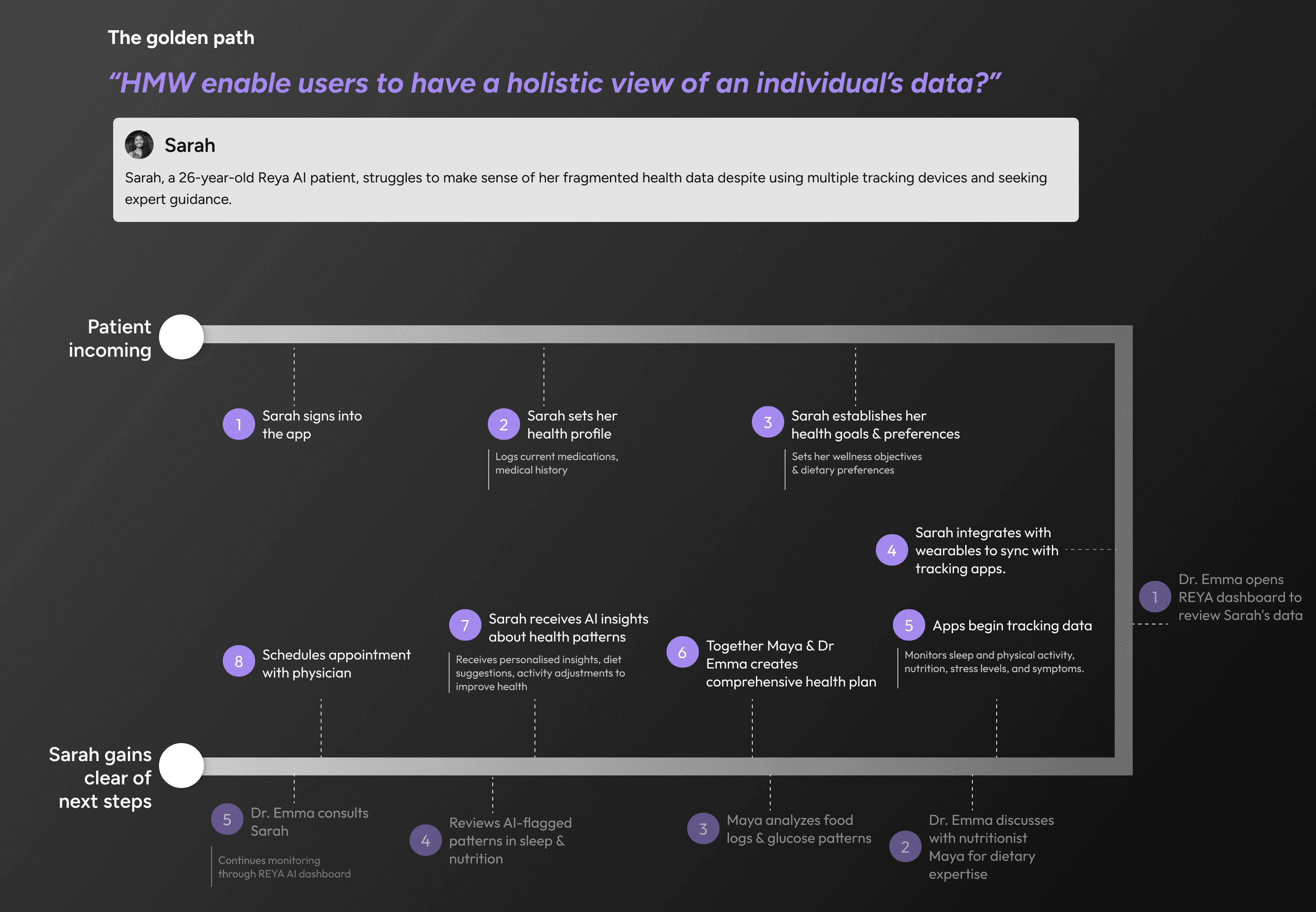
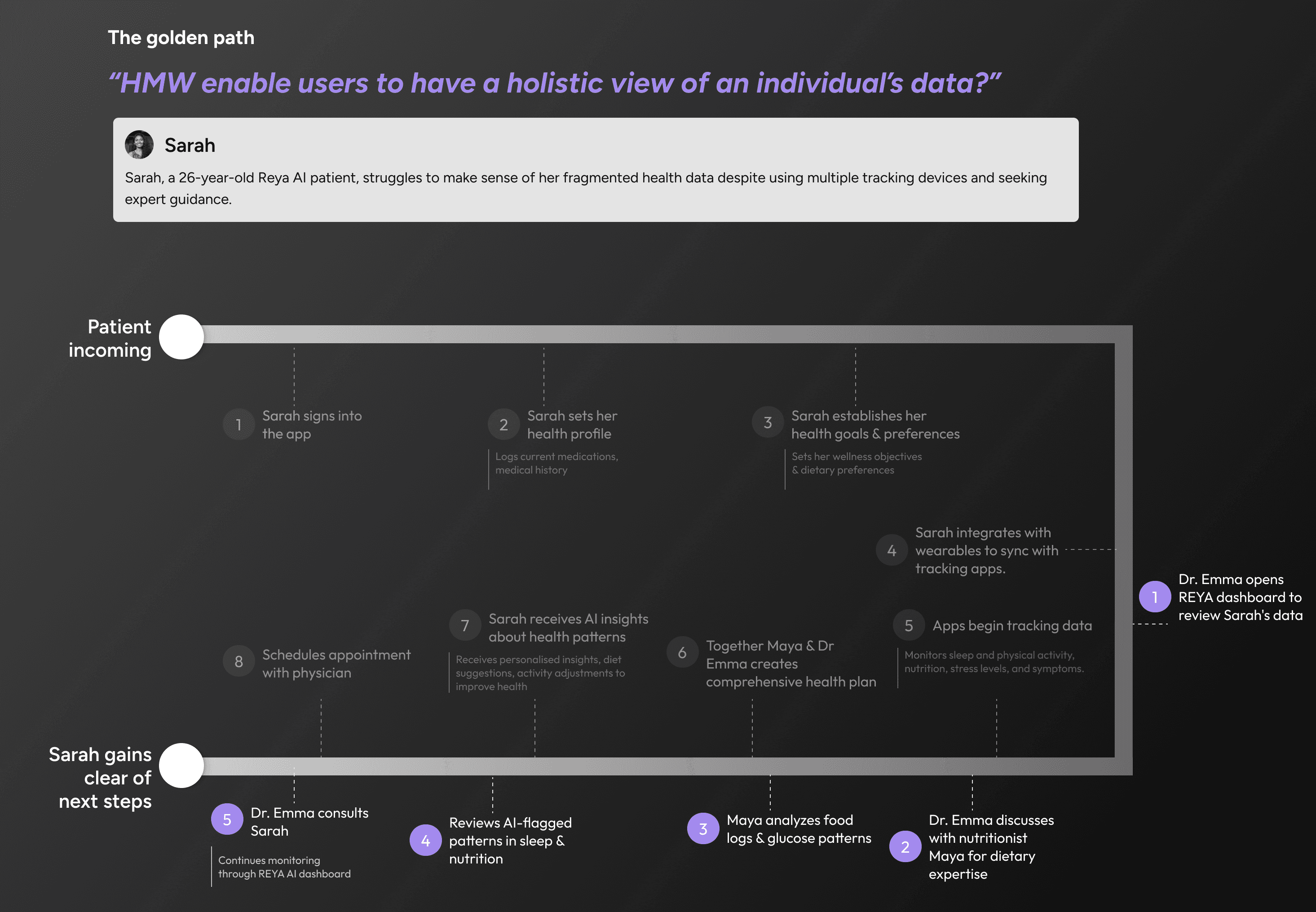
Started by mapping the fragmented health data problem, exploring how users like Sarah juggle multiple tracking devices and apps while seeking expert guidance. Identified key pain points: scattered health data, time-consuming manual tracking, and disconnect between AI insights and professional validation. Through brainstorming, emerged with a unified solution that connects wearable data, AI analysis, and healthcare expertise in one seamless platform, leading to the first iteration of REYA AI focusing on automated health tracking with expert-validated insights.
Started by mapping the fragmented health data problem, exploring how users like Sarah juggle multiple tracking devices and apps while seeking expert guidance. Identified key pain points: scattered health data, time-consuming manual tracking, and disconnect between AI insights and professional validation. Through brainstorming, emerged with a unified solution that connects wearable data, AI analysis, and healthcare expertise in one seamless platform, leading to the first iteration of REYA AI focusing on automated health tracking with expert-validated insights.
Design direction
Previously untouched area = No branding and a scope for solid design direction
REYA AI needed more than just functional flows - it needed a cohesive visual identity that could build trust and make health data feel approachable. Starting from scratch gave me the opportunity to craft both the experience and its visual language.
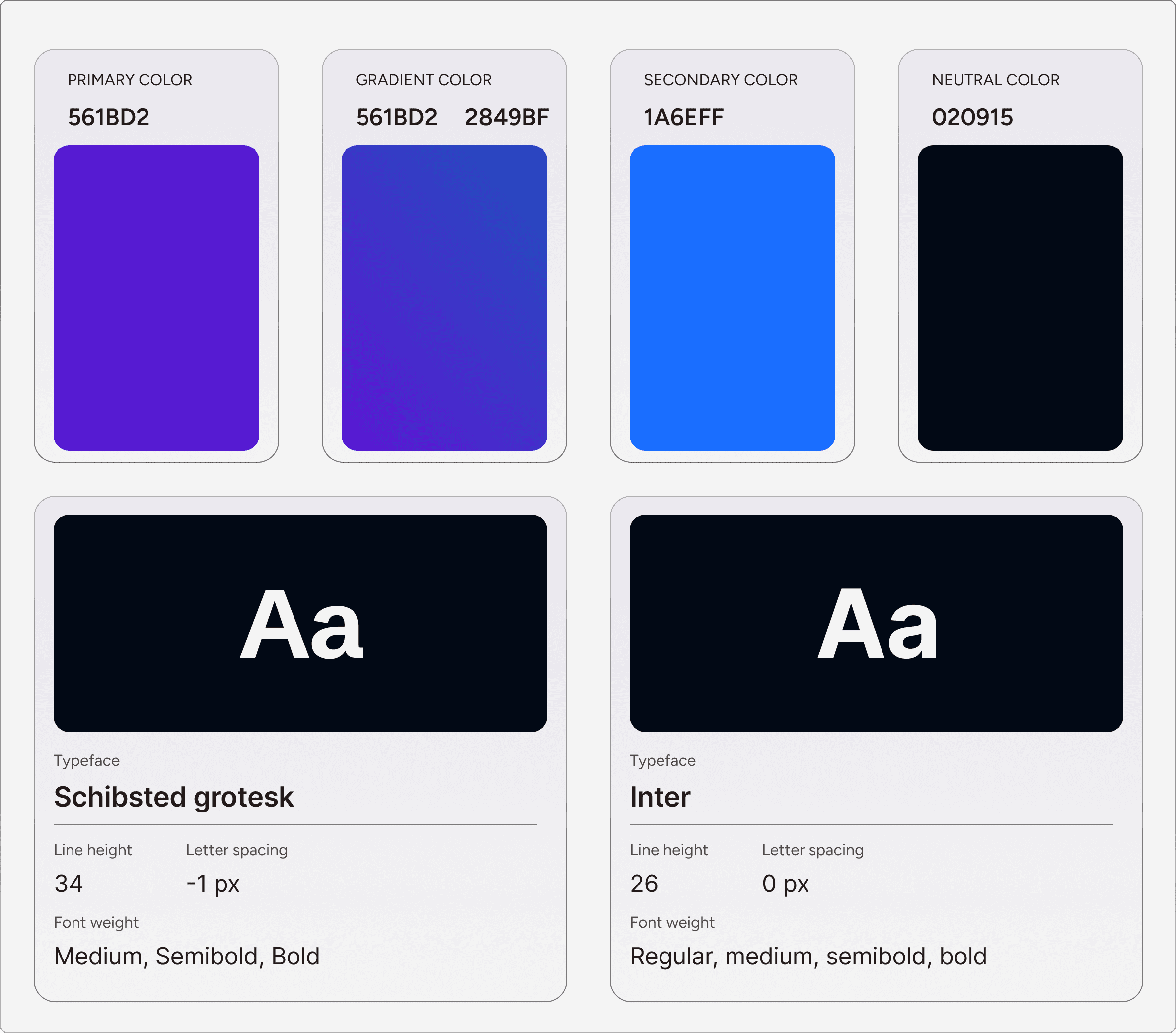
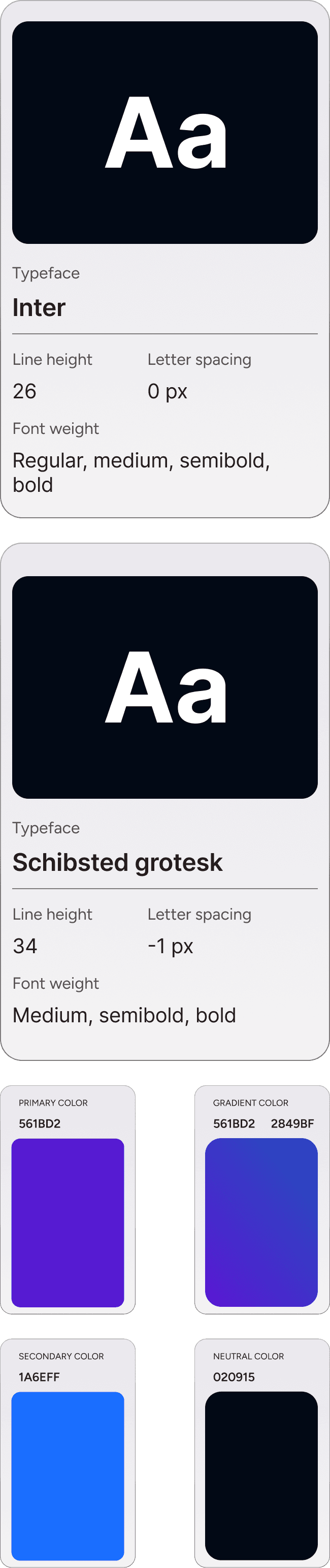
Visual Foundation: I collaborated with another designer to build a design system that balanced clinical precision with human warmth. The color palette integrates soothing teals and calming blues to convey medical expertise, while soft corals add an empathetic touch. Typography pairs a geometric sans-serif for data clarity with a friendly interface font that makes health information more digestible.
REYA AI needed more than just functional flows - it needed a cohesive visual identity that could build trust and make health data feel approachable. Starting from scratch gave me the opportunity to craft both the experience and its visual language.
Visual Foundation: I collaborated with another designer to build a design system that balanced clinical precision with human warmth. The color palette integrates soothing teals and calming blues to convey medical expertise, while soft corals add an empathetic touch. Typography pairs a geometric sans-serif for data clarity with a friendly interface font that makes health information more digestible.
Typography
Visual design
Homepage
Reya's homepage needed to serve multiple audiences — patients, families, and medical professionals. Through research, we identified three core UX goals:
Emotional reassurance: Make the user feel they are not alone.
Credible tech voice: Communicate AI without overwhelming.
Clear CTA flow: Guide users towards the next step based on their need.
We used warm but clean visual aesthetics, calming animations, and concise microcopy to deliver an accessible, humanized experience. The video prototype showcases:
A simplified hero narrative with trust-driven messaging.
Clear user segmentation for navigation (Patient, Clinician, Supporter).
Subtle motion design to guide eye flow and reduce cognitive load.
Reya's homepage needed to serve multiple audiences — patients, families, and medical professionals. Through research, we identified three core UX goals:
Emotional reassurance: Make the user feel they are not alone.
Credible tech voice: Communicate AI without overwhelming.
Clear CTA flow: Guide users towards the next step based on their need.
We used warm but clean visual aesthetics, calming animations, and concise microcopy to deliver an accessible, humanized experience. The video prototype showcases:
A simplified hero narrative with trust-driven messaging.
Clear user segmentation for navigation (Patient, Clinician, Supporter).
Subtle motion design to guide eye flow and reduce cognitive load.
Design Impact: Improved clarity and emotional engagement from first touchpoint, driving a higher intent-to-engage rate during user testing sessions.
Technology page
Advanced technologies are often difficult to present in a digestible format. Our design approach for the technology page centered on progressive disclosure, ensuring users could scan or dive deep based on their technical comfort.
Key UX strategies included:
Segmented content blocks with collapsible elements for layering technical depth.
Microinteractions that enhance exploration without adding friction.
A modular layout for explaining concepts like “Reya Brain,” “Pathway Engine,” and “Clinical Alignment” using iconography and short visual loops.
The video prototype illustrates how we simplified technical concepts visually while preserving credibility. Tooltips and side explanations support comprehension without breaking page flow.
Advanced technologies are often difficult to present in a digestible format. Our design approach for the technology page centered on progressive disclosure, ensuring users could scan or dive deep based on their technical comfort.
Key UX strategies included:
Segmented content blocks with collapsible elements for layering technical depth.
Microinteractions that enhance exploration without adding friction.
A modular layout for explaining concepts like “Reya Brain,” “Pathway Engine,” and “Clinical Alignment” using iconography and short visual loops.
The video prototype illustrates how we simplified technical concepts visually while preserving credibility. Tooltips and side explanations support comprehension without breaking page flow.
Design Impact:
Stakeholders reported an increase in understanding of the technology's clinical relevance, especially among non-technical decision-makers.
Design Impact:
Stakeholders reported an increase in understanding of the technology's clinical relevance, especially among non-technical decision-makers.
The impact
A sweet ending
User-Centric AI Integration – Designed an intuitive interface that simplifies complex AI-powered healthcare insights for both doctors and patients.
Streamlined User Journeys – Reduced cognitive load with clear navigation, ensuring quick access to reports, consultations, and AI recommendations.
Accessibility & Inclusivity – Implemented contrast-rich visuals, large touch targets, and multilingual support to cater to diverse patient demographics.
Trust & Transparency in AI – Enhanced user confidence by providing explainable AI-driven insights, ensuring clarity in diagnosis and predictions.
Enhanced Patient Adherence – Personalized AI-driven health recommendations, combined with an engaging UX, improved treatment compliance.
Connect to Content
Add layers or components to infinitely loop on your page.